In HubSpot, a deal belongs to one company, but every Vantage deal belonged to two.
One agency hires you to run campaigns for several different brands. The agency pays; each brand runs its own campaign. But a HubSpot deal points to only one company, so every deal had to pick a side: the agency and lose the brand, or the brand and lose the agency. Either way, half the picture disappeared.
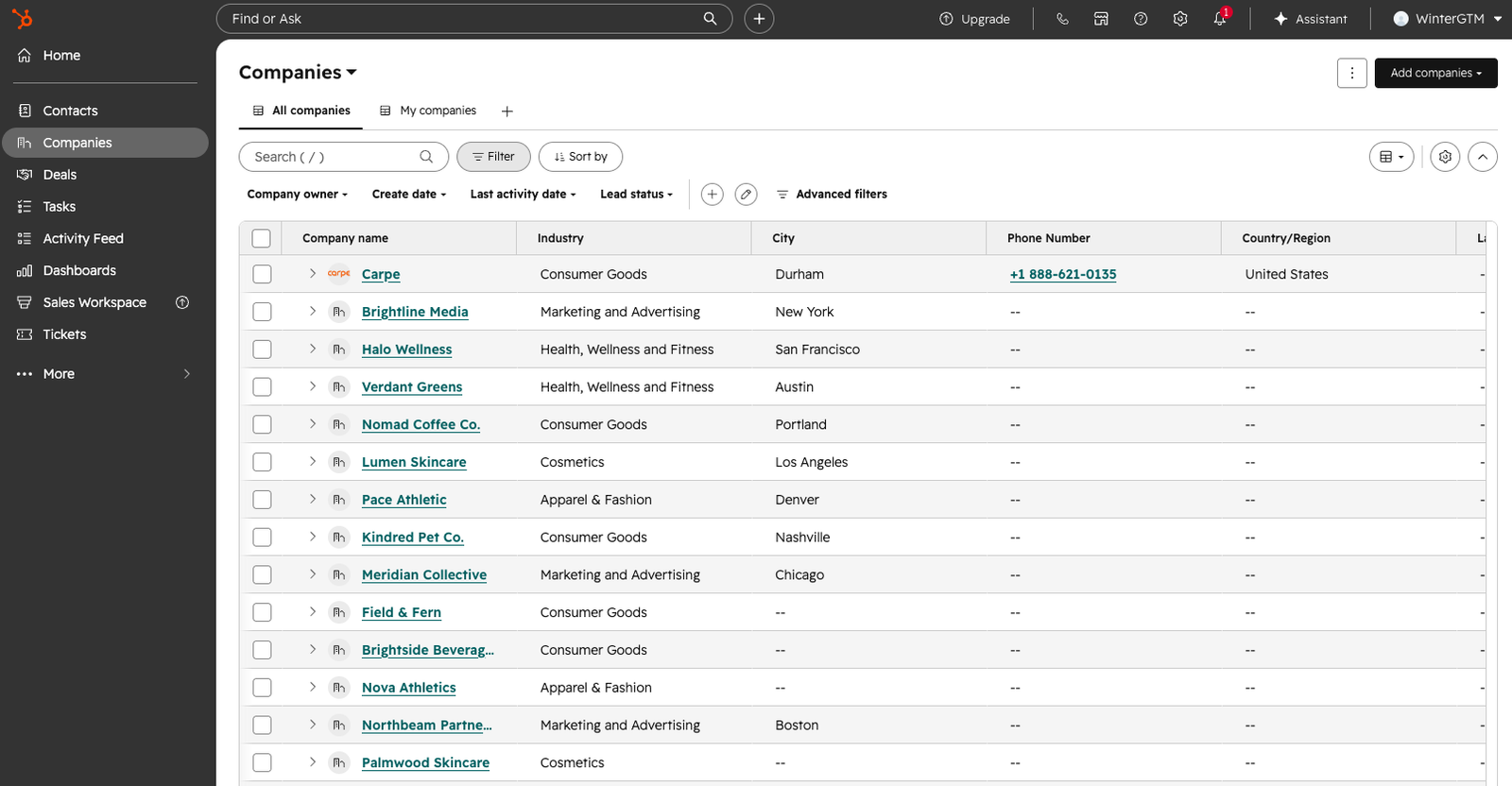
assets/before-companies.png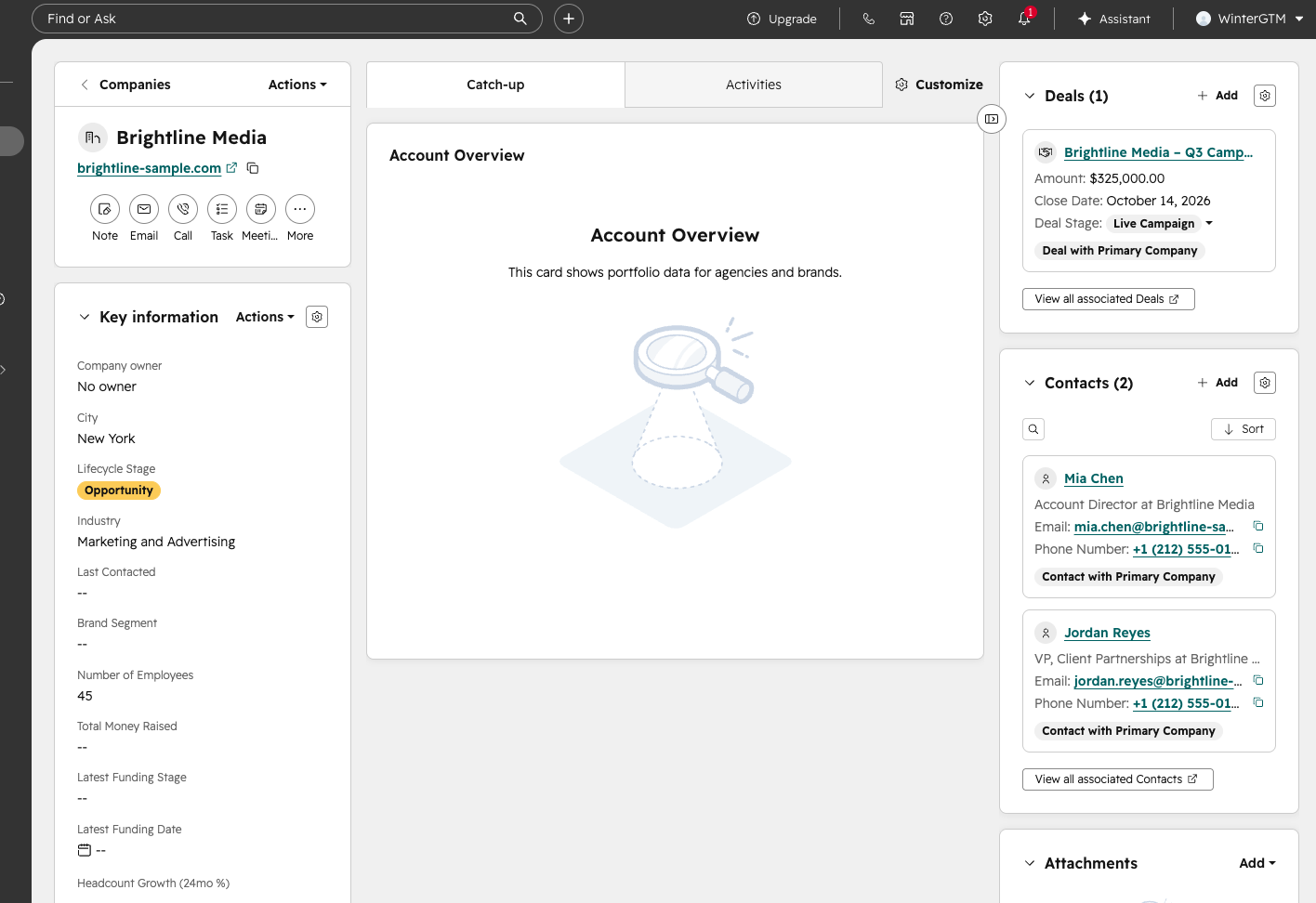
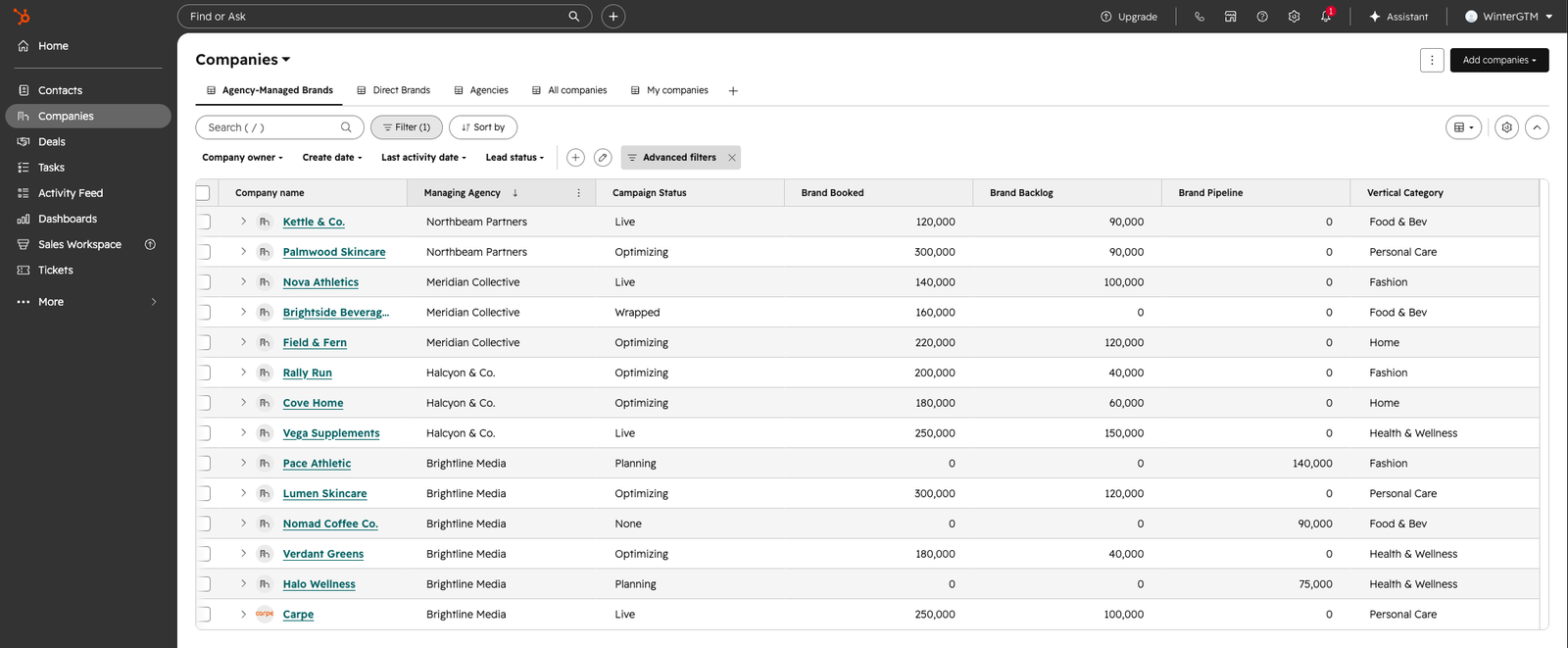
assets/before-record.pngDirect or agency-managed, never a guess.
Every brand is tagged Direct or Agency-Managed automatically, with its managing agency, campaign status, and revenue sitting on the record as real, sortable fields instead of tribal knowledge.
Added custom company properties brand_relationship, managing_agency and managing_agency_id, then wrote a Python script () that walks each brand's parent-agency association and stamps all three onto the record. Two saved views filter on the field, so "show me every agency-managed brand" is one click, not a spreadsheet.
assets/segments.pngDeals are the sale, and only the sale.
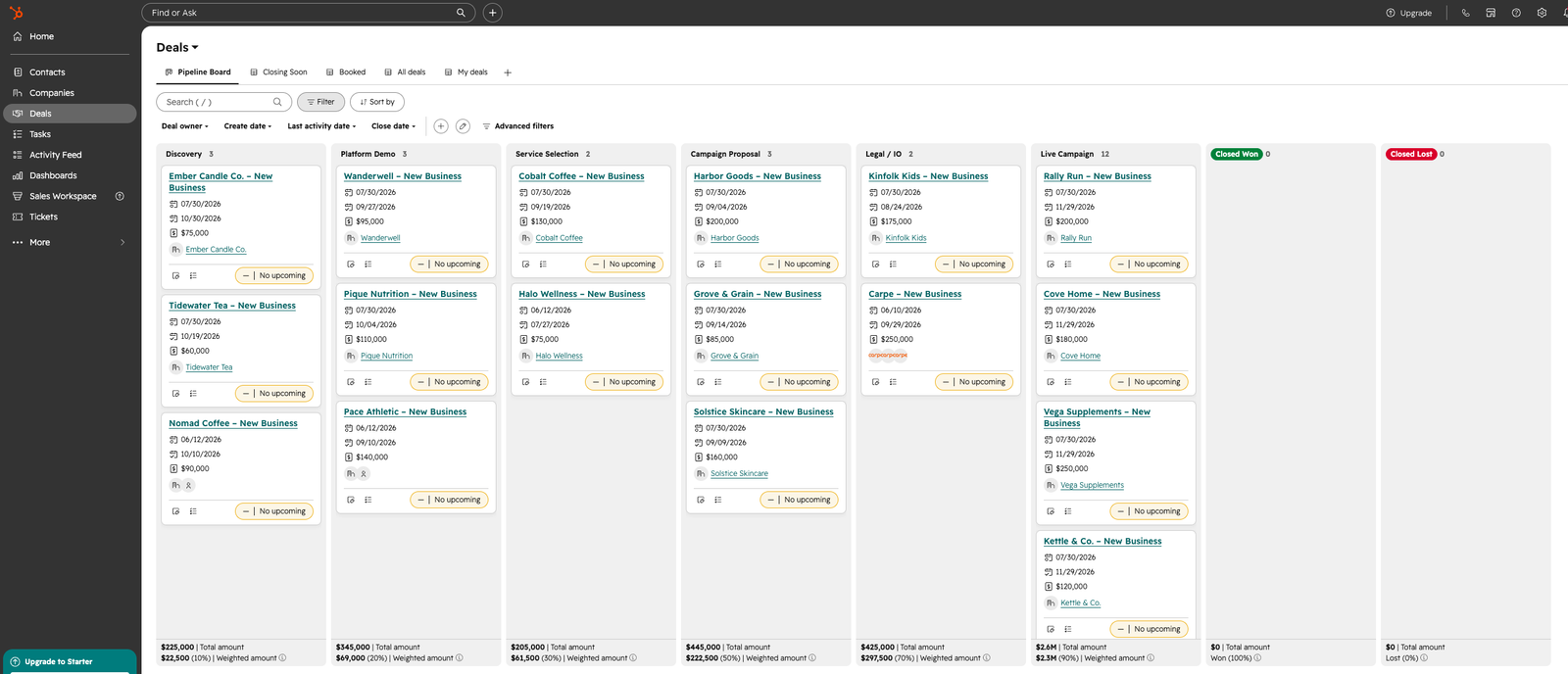
One number the team works day to day: no campaign noise, no delivery status. Just who's paying, how much, and an honest forecast.
The 8 stages came out of planning meetings and interviews I ran with the sales team, not a template. I built the pipeline (Discovery → Live Campaign) with required-stage progression, tied each close date to its revenue-recognition date so the forecast stays honest, and saved Closing Soon / Booked / Stale cuts on top.
assets/commercial-layer.pngTickets, repurposed as a campaign-delivery board.
Each brand's campaign runs on its own board (planned, trafficked, live, optimized, wrapped), so delivery status never contaminates the sale.
A campaign has a different lifecycle from a sale, so tracking it in Deals would pollute the sales forecast. Tickets are HubSpot's native object for operational, status-tracked work, so rather than a custom Campaign object I repurposed the standard Tickets object into a 5-stage delivery board, with custom flight-date and media-spend fields, tracked per brand and fully separate from the deal.
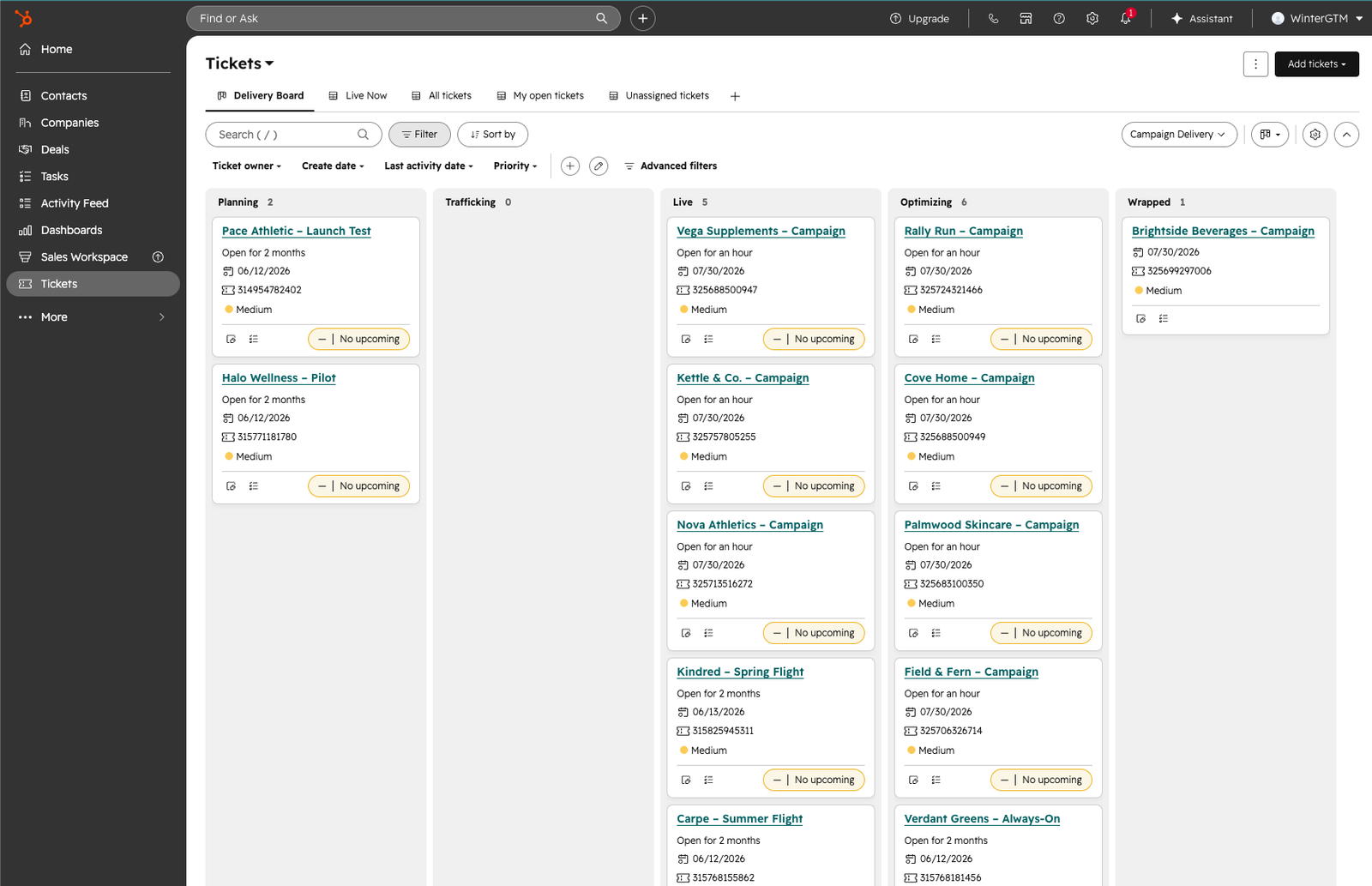
assets/delivery-board.pngThe vocabulary the business actually uses.
Off-the-shelf, HubSpot has no field for a "flight date" or a "TV creative." So I gave it their language, as structured, reportable fields instead of free-text notes.
- Deals: Service Type, Engagement Type, Primary KPI, Target Geography, Has TV Creative, Invoiced to Date.
- Companies: Brand Segment, Vertical, plus rollup fields: booked, backlog, campaign status, managing agency.
- Campaigns: flight dates, media spend, KPI, geography.
Created 30+ custom properties across Deals, Companies, and Tickets through the CRM API (scripted with a service-account token, since the CLI's user token can't write schema). Each is a typed field, dropdowns and numbers rather than free text, so the data stays clean and everything downstream (cards, views, rollups) reads from it.
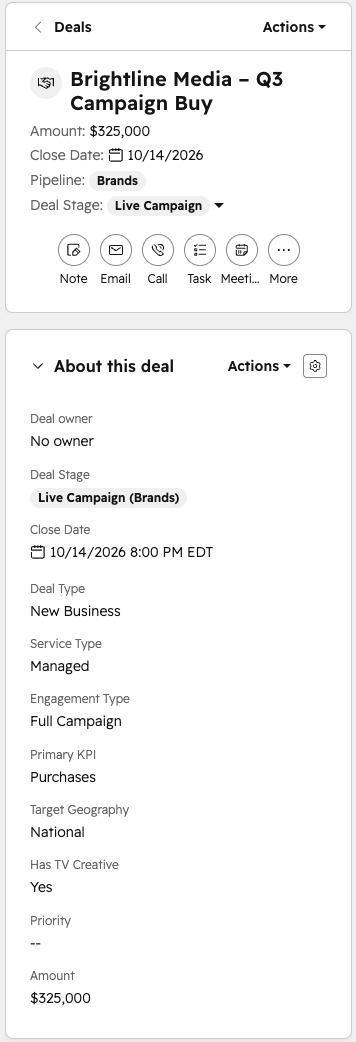
assets/deal-record.pngA deal record showing the custom fields
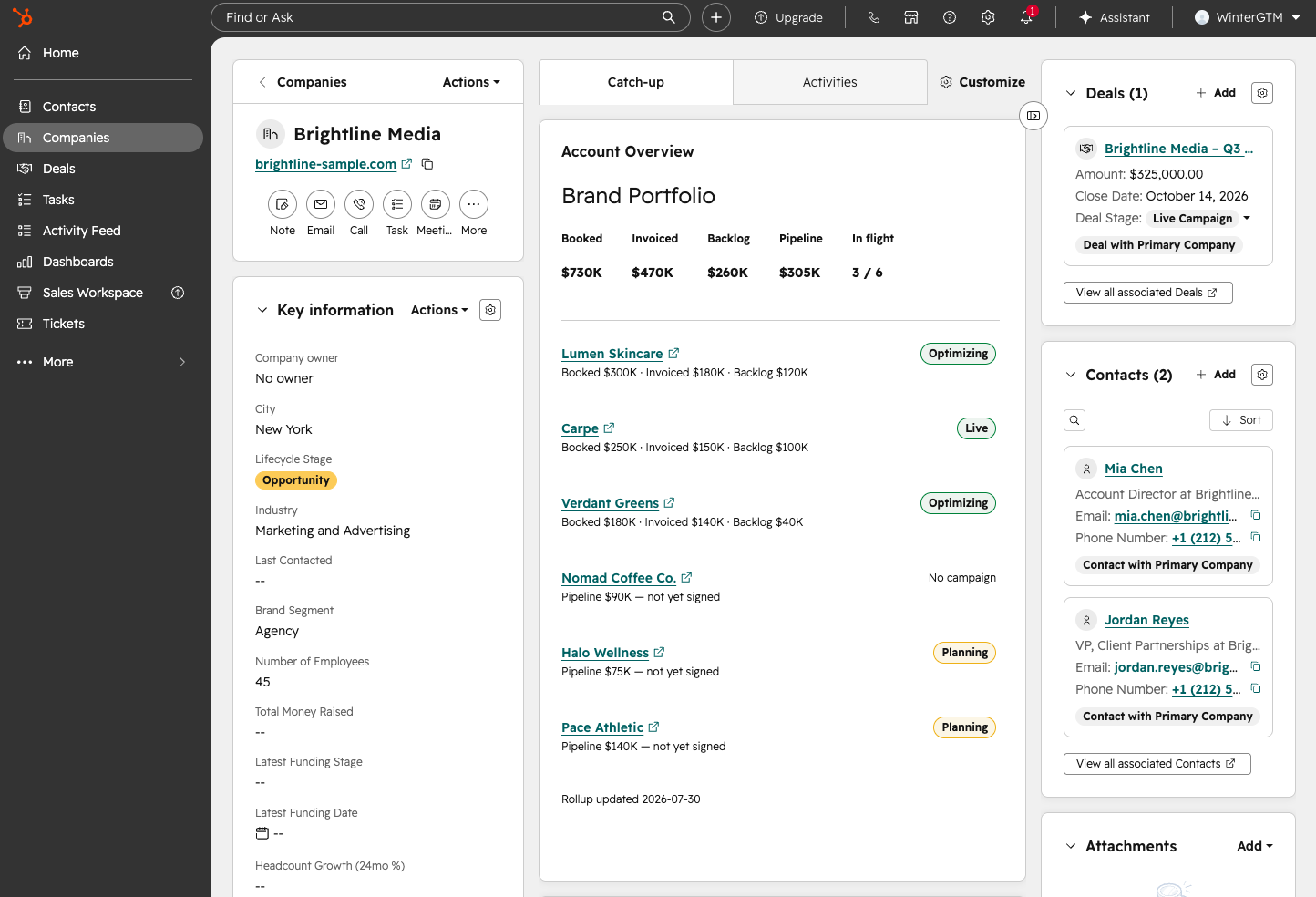
One card, two faces: agency rollup, or brand snapshot.
View an agency, and the card rolls up every brand beneath it. View a stand-alone brand, and it shows just that brand's own revenue and campaign. View an agency-managed brand, and it adds who manages it, with a one-click link back to the agency.
A single React component reads brand_segment and branches: the agency face parses a rolled-up JSON of every linked brand; the brand face reads its own revenue fields, adding the managing agency when there is one. Everything is pulled live via the fetchCrmObjectProperties action.
assets/agency-portfolio.png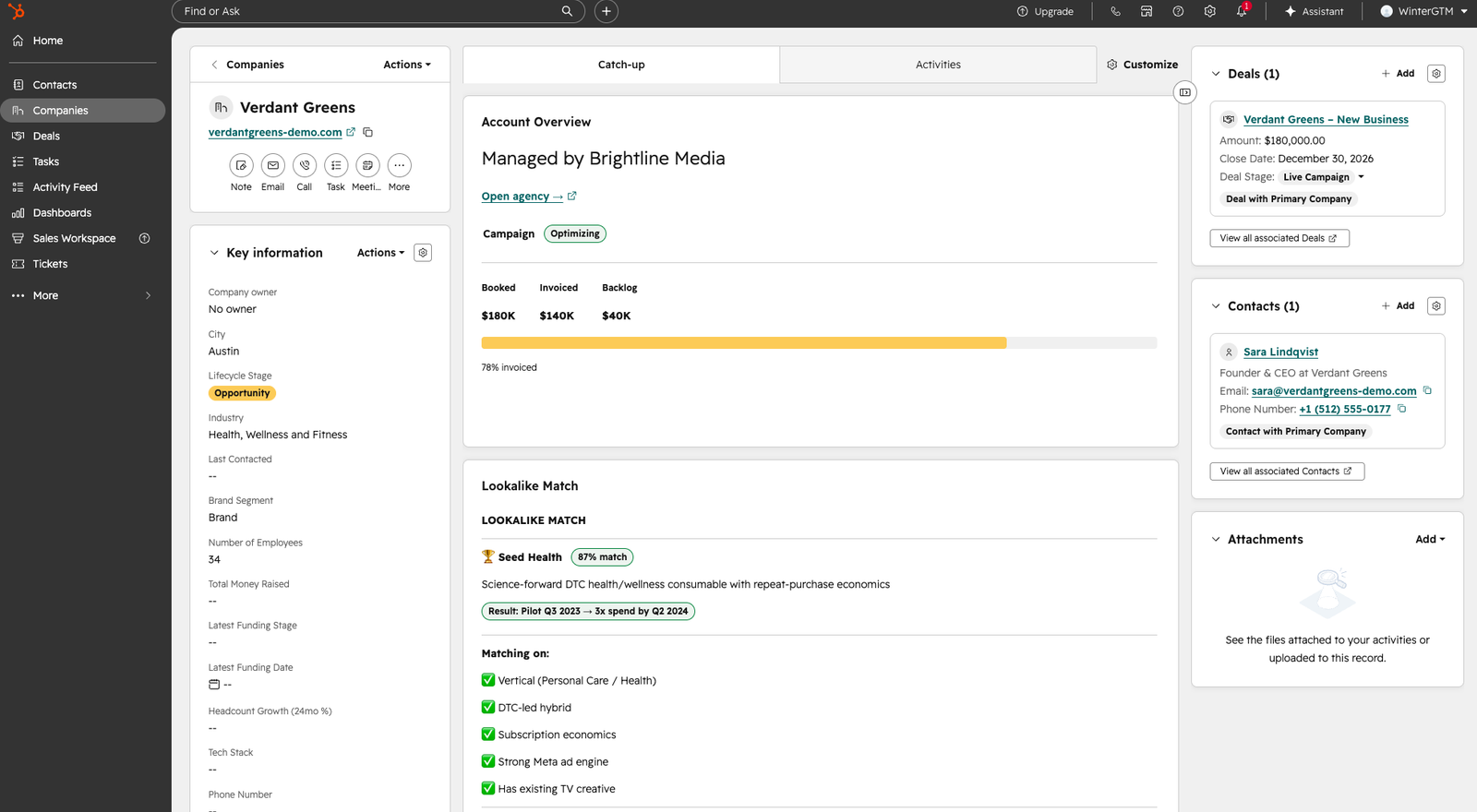
assets/brand-card.pngReal-time ICP scoring, pulled from an external API, right in the record.
- A second card sends the company to a live external service that scores its fit against a defined ideal-customer profile, by matching it to lookalike brands that have already won on TV.
- The result is explainable: a fit score, the exact criteria it matched (vertical, DTC model, subscription economics, ad engine, existing TV creative), and comparable brands with real outcomes.
- No middleware, no page reload: the CRM becomes the front end for a custom scoring engine.
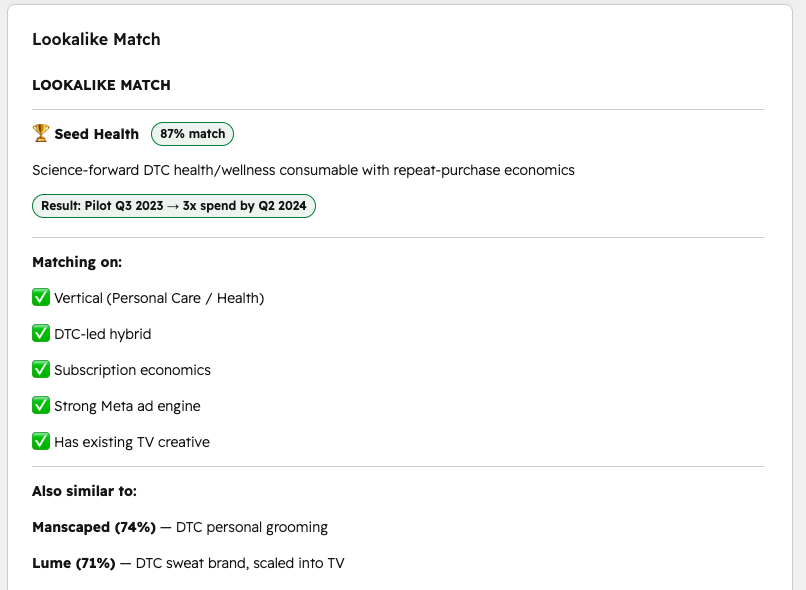
assets/live-card.pngThe populated Lookalike Match card
From a domain to a full record in one run.
HubSpot's own enrichment is a paid add-on that mostly fills in a company you already have. It doesn't hand you the buying committee. Apollo does both.
- Apollo pulls verified firmographics (funding, tech stack, headcount) and the actual decision-makers, in one pull.
- One script maps it to HubSpot: dedupe by domain, then create the company, contacts, and a Discovery-stage deal, fully wired.
- Real data from day one, not an empty CRM to fill by hand.
 Apollo.io
# apollo JSON in → mapped, deduped, connected record
org, people = load(apollo_org), load(apollo_people)

# reuse the company if the domain exists, else create
company = find_by_domain(org["domain"]) \
          or create_company(map_company(org))

for p in people:                 # decision-makers → contacts
    c = create_contact(map_contact(p))
    associate(c, company)

deal = create_deal(company,      # Brands pipeline
                   stage="Discovery")
associate(deal, company)Rank every agency by booked, backlog, or live campaigns.
The rollups surface as sortable columns (brands, booked, backlog, campaigns live), so the whole book ranks itself by revenue.
The rollup fields become sortable company columns, and I saved a full set of views (Agencies, Direct Brands, Agency-Managed, plus deal, ticket, and contact cuts), so every operational question is a saved view, not a rebuild.
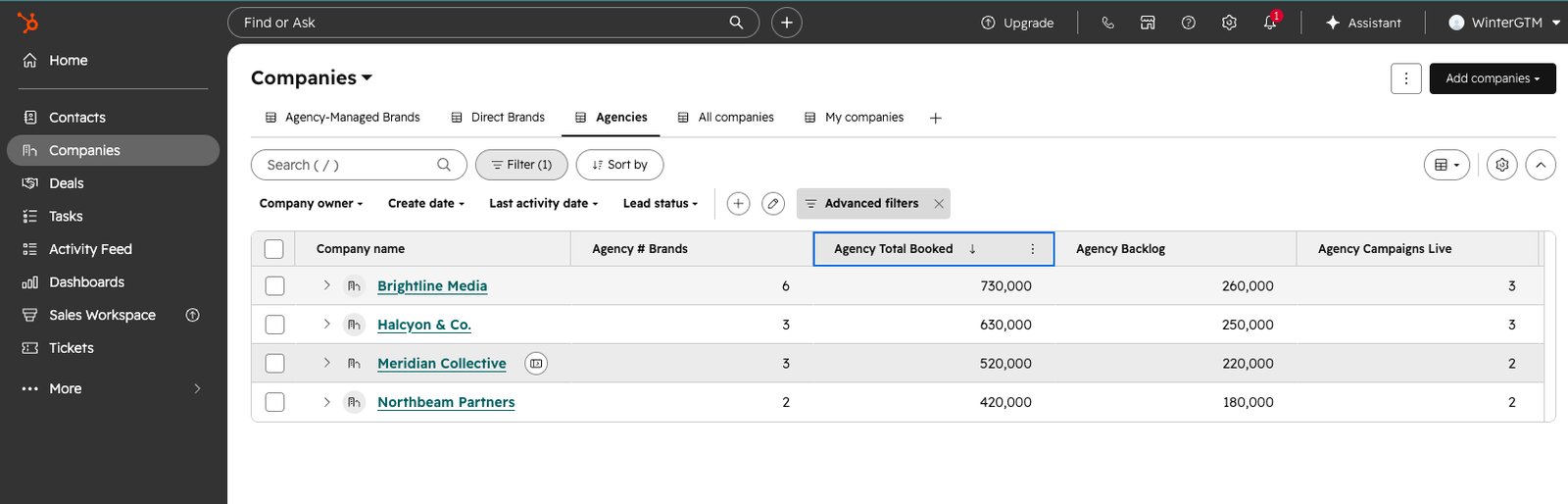
assets/book-of-business.png